These charts are scanned from Only An Ocean between, the second book in the America and Britain series. They were written to help Britons understand America, and vice versa. The second book in the series, Our Two Democracies At Work, is here.
Here you go, finally some work for you to look at.
I was recently approached by the University of Bath to provide a logo for a new project they are undertaking – to help “improve the manufacturing competitiveness of the UK”.
You can read all about the clever stuff they are doing in this press release, visit their website, or follow them on twitter.
Alternatively you could just have a look at the new logo…
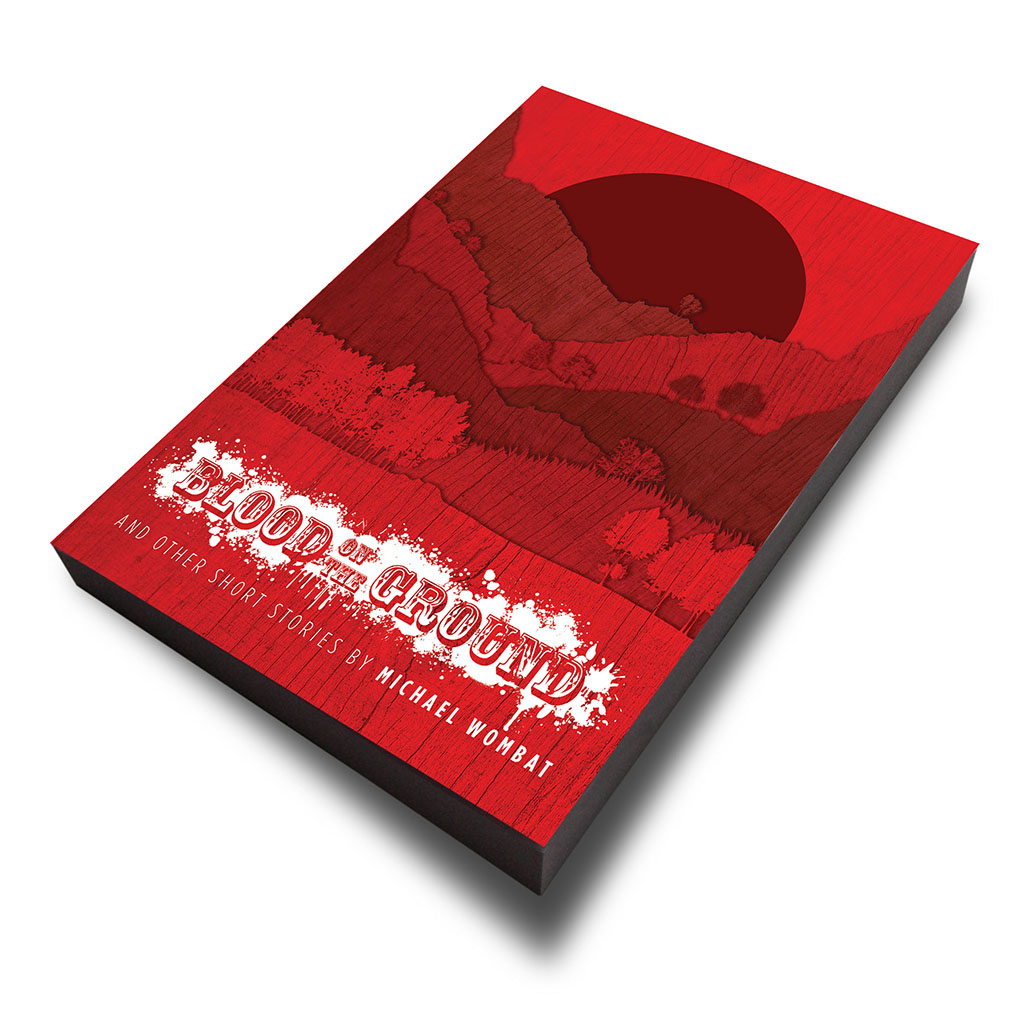
Here’s a quick mock-up of a book cover I was recently asked to design. It was the first time I’d been asked to do a book cover, so it was an interesting challenge…. especially considering as I was quite keen to keep the design very simple.
I produced two visuals initially, and although the one above was felt to be most suitable for a thriller, the author loved the second design so much he decided to use it for a special edition hard cover.
If you would like to purchase the book (I’ve read the first two chapters and it seems like a rather good tale) the paperback version is available here, and the fancy hardback version here.
Here are some more Isotype infographics from the 1940s as a follow-up to yesterday’s post.
The book is called Our Two Democracies At Work, by K B Smellie. It is from a series called America And Britain, which “compares the political life of Britain and America by means of contrasted photographs and charts prepared by the Isotype Institute.”
Apparently “if you are British this book will help you understand newspaper items, films, and stories about America. If you are American it will do the same for you by Britain.”
And this was hidden beneath the dust jacket. Very nice.
I bought this book ages ago because of the nice infographics, and thought I’d share it. For more of the same, please see the following blog post.
I apologise for the quality of the scans. My crappy scanner, and the wartime austerity printing and paper don’t really mix well…but I think you’ll get the idea.
The book is called Landsmen And Seafarers by Maurice Lovell, and is from a series called The Soviets and Ourselves. It “deals with the major influences of circumstance and history which have shaped the Russian and British peoples diversely, in separation, to bring them at last into close alliance”.
The following graphics are by Dr Otto Neurath of the Isotype Institute.
And this was on the hardback cover under the dust jacket.
Does anyone know what is depicted on this Russian box. It is about 18 x 8cm in size, and the picture is lacquered to the lid.
This ticket was in the box. Can anyone read Russian?
Update – thanks to Twitter I have managed to find out who is on the box, and where it came from.
The ticket says:
Управление местной промышленности
МСТЕРСКАЯ
диплома 1-й степени
художественная фабрика
ПРОЛЕТАРСКОЕ ИСКУССТВО
Which translates to:
Control of the local industry
MSTERSKAYA
the diploma of the 1st degree
the artistic factory
PROLETARIAN ART
The box is a Mstyora, (or Mstera) originally made in the Russian town of the same name. Wikipedia has this to say about it:
Mstyora (or Mstera) miniature (Russian: Мстёрская миниатюра) is a Russian folk handicraft of miniature painting, which is done with tempera paints on varnished articles mostly made of papier-mâché.
Mstyora miniatures appeared in the settlement of Mstyora (in modern Vladimir Oblast) in the early 20th century on the basis of a local tradition of icon-painting.
In 1923, Mstyora painters formed an artel called Ancient Russian Folk Painting (Древнерусская народная живопись), renamed Proletarian Art (Пролетарское искусство) in 1931.
This artel was turned into a factory in 1960. The Mstyora painting technology was borrowed from the Palekh artists.
Mstyora miniatures usually represent characters from real life, folklore, and literary and historical works. Warmth and gentleness of colors, depth of landscape backgrounds (often with blue dales in the back), small size and squatness of human figurines, and subtlety of framing pattern done in gold are typical.
Interestingly it seems that after the Russian revolution, religious icon painting was banned, and these Mstyora were the icon artists’ new means of making a living.
The box itself features an illustration called “Song of Wise Oleg” which is the name of a ballad by Alexander Pushkin. It tells the tale of Oleg of Novgorod, a prince who ruled all (or part) of the Rus people in the early 10th century. It is based on the legend that (according to Wikipedia)…
it was prophesied by the pagan priests that Oleg would take death from his stallion. Proud of his own foretelling abilities, he sent the horse away. Many years later he asked where his horse was, and was told it had died. He asked to see the remains and was taken to the place where the bones lay. When he touched the horse’s skull with his boot a snake slithered from the skull and bit him. Oleg died, thus fulfilling the prophecy.
I think the illustration itself is by Alexey Mikhailovich Kosterin, a miniature artist, born in the village of Kholuy in 1929.
So there you have it – the mystery of the Russian box, solved. I am especially grateful for tweeters Alexey Melnikov (@aamelnikov_chal) and Jeffrey Smith (@jeffreysspsmith) for their invaluable help recognising the type of box, and the artwork on it.
When I discovered Links With Old Nottingham, an old (1928) book about interesting places in an around Nottingham, I visited many of the places mentioned (or in many cases, the places where they used to be).
One place that always interested me was The Murder Stone, but it also eluded me as it was a good way out of town. Then, for 3 months I worked as a freelance artworker in Mansfield, and every day I passed the place where it was supposed to be. One day I finally caught a glimpse as the bus whizzed past – and I resolved to visit it soon.
Notice the flowers? I wonder who leaves them. The story behind it is as follows, quoted from Links With Old Nottingham (which is online here).
OF all the thousands of people who pass along the Nottingham-Mansfield road during the year, very few notice that at the foot of the rise leading up to Harlow Wood, where the new Orthopaedic Hospital stands, there is, on the eastern side of the road, a stone which, to all appearances, is a tombstone. Of the few people who notice this stone, stilt fewer know its story.
It commemorates a young girl of the name of Elizabeth Shepherd. On July 7th, 1817, this girl left her home at Papplewick, and went over to Mansfield to seek for employment. Towards the evening her mother, having gone out to meet her, saw her returning along the road, and, turning back towards Papplewick, she expected that in due course her daughter would overtake her. However, she did not, and upon a search being made, her body was discovered lying on the spot where this memorial is now erected.
A hue and cry was raised, and a ne’er-do-well called Charles Rotherham came under suspicion. This suspicion deepened into conviction when it was discovered that he was in possession of a cotton umbrella and a pair of shoes which had been worn by the unfortunate girl.
Rotherham was duly executed and a memorial was erected to Elizabeth Shepherd, which still stands and bears the following inscription:
This stone is erected to the memory of Elizabeth Sheppard [sic], of Papplewick, who was murdered while passing this spot by Charles Rotheram [sic], July 7th, 1817. Aged 17 years.
The picture that accompanies this is of a different stone, suggesting that the one above is a 20th century replacement. The spellings of the surnames differs on the two stones, and in the various accounts. Should you wish, a quick Google will reveal the gory details of the murder, but I wont link to them here.
Should you wish to visit, it is on the A60 between Ravenshead and Mansfield. Heading North, stop just as you enter Harlow Wood (there is a track with a barrier where you can park a car) and the stone is on the right, just as the wood begins. It is set down from the road (presumably at the level of the road 200 years ago) and about 2 metres away from it. The view north from the stone, and a Google map follow.
View The Murder Stone in a larger map
This picture has been doing the rounds on Twitter (and Facebook, no doubt).
It is supposedly from the front of The Sun newspaper – and clearly demonstrates how ignorant they are. People were only too happy to re-tweet the ignorant, bigoted journos that write for the sun.
But it seemed a bit fishy to me. Firstly, I’m always suspicious of a popular RT that seems just too good to be true. Secondly, what is that bright bit? It looks like a reflection or a light or a camera flash…but newspaper is hardly reflective, and 20 year old news paper is not that white. Finally, this is a photograph taken of something vertical – on a screen or a wall. It isn’t a photo of a newspaper that someone “stumbled” on, put on a table/floor and took a picture of.
I mentioned this on Twitter, and CJ (he has a locked account) sent me a link to the full page. A full page digital layout? From 1992? That is a little suspicious.
A thorough Googling revealed no other digital versions of The Sun from that era – and very few from later years. But what I did notice was that the Mast Head (the red bit at the top) from the early 90s didn’t match this one.
Also, the date (again, thanks to CJ for noticing) was May 1991, but the first website wasn’t published until August 1991. Although plans for the early web had been in progress earlier, would this really warrant half of the front page of a gaudy red top? The space on the front of The Sun should feature a scantily clad starlet or a disgraced politician. Ideally both together.
Finally, a bit more Googling showed that I was very late to the debunking party and that it had already been discredited on Reddit.
Interestingly, Reddit told me where the original had come from, and it was somewhere that I had found very early on in my search…but I had discounted it because it came from The Sun, and I wasn’t prepared to trust their ignorant, bigoted journos.
The original article came from The Sun – it was a spoof article written for Hold Ye Front Page (warning, this is a link to The Sun, and I know many of you refuse to visit their site).
So, two lessons to learn here. If something looks too good to be true, it is probably worth checking before retweeting. Secondly, just because the source of a piece of information is sometimes bigoted and unreliable doesn’t mean it should be automatically discarded.